Thursday, 7 March 2013

Sleep less, More disease

We spend time one-third everyday to sleep, but it isn't waste of our time at all. People need to sleep, and while you are sleeping, your body system is working and repairing itself.

According to "Poor Sleep Linked to Heart Failure, Norwegian Study Says", substandard sleep can lead to heart severe failure, because your heart is too weak to work and pump blood around the body with the right pressure. The linked between poor sleep and heart failure is unclear, however, smoking, obesity, diabetes, other disease, and bad habit could pulling the trigger to sleepless.

I heard about sleep linked to heart disease for a long time. However, it isn't familiar to me because I always sleep at least 7-9 hours a day. I have known that the lack of sleep can make your health unhealthy and your body system doesn't work very well. For instance, less sleep can tend to eat more. I experienced this theory many times when I had a few hours sleep, I ate more in following day. I don't know why, but I found out in many health magazine, health gurus talking this thing also, sleep and eat. It also make people gain their weight. I read a magazine, they said that body has a health repair clock system. Every part of our body work on the exact time, for instance, large intestine (or colon) is working around 5am-7am, stomach is working around 7am-9am, spleen is working around 9am-11am. If you didn't rest enough, your body system might not work or work with ineffective.

The progress of technology these day making people gradually changing their lifestyle. Before going to bed they always involve with computer, mobile phone, the Internet, laptop, and tablet. This convenient items tend to causing the effect for user one way or another. My friend had a car crash because she's texting to someone, fortunately, she didn't get hurt or any pain, except the panic. I also found on the Internet that the electronic signal can disturb your sleep and make your sleep low quality.

One way to get rid of insomnia which is quite work for me is doing yoga. Slow motion of posing the yoga poses make you sleepy. While you do yoga, yogi always turn on the nature sound or relaxing sound. It's make you feel sleepier.

__________
Reference
Mundasad, S. (2013, March 6). Poor sleep linked to heart failure, Norwegian study says. BBC News Health. Retrieved March 7, 2013 from http://www.bbc.co.uk/news/health-21667943 

Wednesday, 6 March 2013

Perspectives on Human Wonder

"Ref Practice" was a very boring title for a post, and having written both reference citations and the first summary, I thought I should try to combine them into a proper blog post. This is that attempt.

According to Gerry Hadden in "The Church Dome Painted by Graffiti Artists", a priest in Spain has had a graffiti artist adorn the main dome of his largely austere church in bold colours with a modern take on Romanesque Christian art (2013).

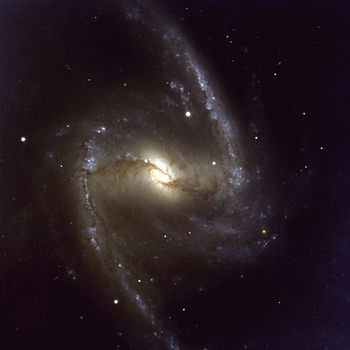
Meanwhile, "First glimpse of a black hole's spin"  (2013) reports that scientists using x-ray telescopes in space have acquired data that has enabled them to calculate the angular momentum of a super-massive black hole with an edge velocity approaching the speed of light, at the centre of a galaxy, which measurement gives clues about the formation of the galaxy itself.

Post-Enlightenment
Christian art from Spain.
As I was thinking about what these very different stories from the BBC News a week ago might have in common, it occurred to me that in their very different ways, both testify to the wondrously varied brilliance of human beings: one in the field of art and anthropology, and the other in our exponentially deepening understanding of the universe in which we live. I have admit that I think the new artwork in the church by Spanish graffiti artist House, whose real name is Raul Sanchez Araque, is rather more alive and cheerful looking than the very stilted, stereotyped and lifeless look of much Romanesque art. It always seemed to me that the art of that dark period of Western history, when the democratic and critical ideals of Greece and Rome had been eclipsed by the more primitive, superstitious beliefs of the despotic Eastern religions of Christianity, and later Islam, which brought in their immoral command types of moral thinking from the Bible and the Qur'an. The modern day interpreters from liberal and democratic Spain, reclaimed from both the Christians and the Moslems, looks great. I'm glad that the priest in charge of the church, Father Ramon Borr, had the good sense not to be bound by tradition but to try something new. It's a great success. If only the Catholic Church had more like him, it might be a much better organization, but this decent priest is unlikely to be elected the new pope.

NGC 1365 - 56 million light years away
And it was the Renaissance, when artists like da Vinci threw off the lifeless works of the dark Mediaeval age and returned to classical Greek models, that marked both the end of the Christian strangle-hold on Europe and the return to the classical Western ideals of Greece in thinking, society and politics that made possible the Enlightenment, which began the modern spurt of science, of reason and of democracy in the West. So far, that spurt has not been stamped out by censoring despots who hate free speech and reason. Indeed, as the increasing spread of globalization continues, the world is rapidly adopting the values of Western culture, which are apparently what the vast majority of citizens of every country want, however much their traditional rulers might hate such hopes and changes to the societies they rule over. Since Galileo was censored by oppressive popes, science and reason have increasingly spread so that today a group of scientists at Harvard University can confidently tell as how rapidly a most exotic heavenly body 56 million light years away from us  is spinning - when the light and x-rays the scientists have measured left that distant place, there were still dinosaurs walking the Earth! When I was born, not that long ago, black holes were not even believed to exist by most scientists, and now we are investigating their properties.

And tomorrow?

__________
Reference
First glimpse of a black hole's spin. (2013, February 27). BBC News Science & Environment. Retrieved March 6, 2013 from http://www.bbc.co.uk/news/science-environment-21607945

Hadden, G. (2013, February 27). The church dome painted by graffiti artists. BBC News Magazine. Retrieved March 6, 2013 from http://www.bbc.co.uk/news/magazine-21529832

What Bas Likes to Read


My interesting reading thing  is news because I love to know what happen around me. My scope of news that I want to know did not limit only just in Thailand, I also interest in other countries's  news that happen in across the world such as the the US and the UK. Moreover, I usually read the English news from news's websites, for example, BBC News website because I can practice my reading English skill while I can receive update news too. Furthermore, although it does not matter what the news are, I prefer to read the scientific news to entertainment news because I think these news can improve my knowledge more than the latter.

What Apple likes to read

I like to read about arts since I was in middle school. My arts instructor give a book to me " The History Of Arts". When I first saw it I think why he gave me a big heavy book to me anyway I opened it and can stop to read it. that why i started to love to read Arts Books every kind of it and I started to made my own art work.

What Sorn Likes to Read

I like to read about travelling. I would say reading travel magazine is my favorite thing to do when I have free time. I have been enjoy it since I was in university. I met one of my beloved professors, Mark, who loves to travel around the world and always takes terrific photos of places wherever he go. He always said in class that "Life is journey, it would be better to find out more interesting things than stay in your own corner."

What Kan Likes to Read

I like to read about new technology especially computer technology, gadget, mobile devices, communication technology which make influences in our daily life, and I also like to read about travelling which suggests us  new places to visit and tells us interesting experiences of traveler. What's more, there are many brilliant photos around the world that can impact me in travelling magazines.

What Ming likes to read

I like to read about science, especially in astronomy. When I was young I loved gazing night skies, I've always been fascinated by what hidden in the skies. My first astronomy book is "Universe in a Nutshell" by Stephen Hawking. I really love that book since Hawking has his way to describe something simply ,and I learned many things from it, not only some theories of Hawking but also inspiration to be a good but simple theoretician.

Now I'm interesting in experiment to find dark matter in the universe and trying to find something to read about CERN's experiment. I'd love to read a review about CERN's experiment that written in an understandable for high school students way.
_______


What Arm Likes to Read

I like to read scientific magazines. I really like that so much because I feel excited when I read the new topics. I discovered myself that I enjoyed reading these by  persuading from my friends when I studied in upper secondary school. They took me to read in the library, and traveled in strange places every weekend. For these book, one of the most interesting book that I love is the Natural Globalization. I have been fascinated in topics of Earth, oceans, and animals living in the deep sea. It also show about the movement of plates, the event of life's origin, the disasters from global warming, and the accuracy of the end of the world.


What Tape Like to Read

I like to read about business magazine. I would to know how the world is changing because nowadays many things are changing rapidly such as technology, communication and economy. I think if someone has more knowledge, he/she will get more benefit for do his/her business. Not only about business that I would like to read but also about how to use the internet. At present , the internet are popular for anyone who would like to open their shop because it less your cost and it is a easy way to approach to customers.

What Daniell likes to read

I like to read travel magazines. That's because I like travelling. I have a strong curious about different culture. I want to know what amazing lives different people lead. Travel magazine usually contains many interesting finding of people when they are travelling. The first travel magazine I bought is Traveler. One of the most attractive articles is about the experience in Bali. The article tells about surfing, diving, sight seeing and many gorgeous activities in Bali.

What Poom Likes to Read

I like to read about restaurant and cuisine. I enjoy eating because good food makes me feel happy. Food is not just only the taste but it is also an art. Dish decoration is important since it represents how the chef cook food and shows the intention of the chef. Actually I am a bookworm, so I prefer to see food photos or food album in the review blog which there are many comments and ideas from different people.

What Bar Like To Read

I like to read science. Especially, scientific magazine including Popular Machine and American scientists. I have been interested by this kind of field for a long time, probably since I became an engineer student. I think this kind of magazine not only make me develop my critical knowledge that I have learnt from the university but also make my perspectives of my career broader. I addition I have been practicing along with this kinds of magazine because it quite fascinating to me to read and I never get bored by such this things.What is more, I think the most interesting part of these books which I've been love to read since I was a child is some experiments which are so much fun.

What Ting likes to read

I like to read detective stories since I was a teenager. I think those stories can makes me understand what  reality works and what comes around and goes around. For example, there are some signal in the beginning and the stories goes more attractive, it helps you thinking who is the murderer or what is true. In that case , it helps you think more deeply why will it happened.


What Peter Likes to Read

I like to read about science. I have been fascinated by science since I was in primary school. At first, it was botany. I used to love the pictures of plants in gardens in my mother's magazines. The cacti especially got my interest. They were totally unlike anything we had around my own home. This soon led to my reading the text that went with the pictures, and a lot of the plants had exotic names. There were the roses and tulips, but also names like rhododendron, aspidistra, and the like. By the time I got to high school, my interests had expanded from botany to biology generally, and I loved reading the lessons in my heavy science books about the workings of bodies and cells. Again, they were filled with wonderful words such as photosynthesis, stomata, phyla, abiogenesis, and mesozoic. I used to have a one hour bus trip to and from school, and most of that time I spend buried in my science books. I guess I was a bit of a nerd.

But biology led naturally, via cell mechanisms, to chemistry, and after a brief fascination with the elements and doing fun things with sodium in the chemistry lab, I moved on to physics, with which I've had a more abiding interest, although evolutionary biology, and more recently neuro-science, have came strongly back into my areas of interest. And since mathematics goes to naturally, or necessarily, with physics, I quickly came to love that as well. I don't read mathematics much these days, but that another stage on my path to philosophy, to which I came via logic and metaphysics. I don't much read metaphysics these days, preferring physics or other sciences, but logic is an area that still interests me, and was a major area of study at university.

What Pin Likes to Read

I like to read health magazine and historical or bigraphy book whenever I have free time. I think it is good to know about the background of where we live so history is important to me. Also I like the famous people biogarphy such as Barack Obama, Ongsan Zukye who live and fight for Burma democracy until now or Kanthe who was a leader of India to fight for India independence from England at those day. Sometime I like to read a short English stor or novel for encouraging my English vocabulary. However, I usuallyread variety article on internet such as BBC.news.com or CNN.com. Moreover,when I need to wait for something such as a freind meeting or the train, reading traveling magazine it helps me to relax or never getting bored.

What Peace Likes to Read

I liked to read about the bibliography of famous ancient scientists when I was young. I bought many books related to this topic; even though, the content were pretty the same. I kept reading without any boredom. I was sure that when anyone asked me about the scientists, I could immediately tell what he or she did and discovered. Nevertheless, I hardly recall them these days.
However, my preference changes when I've grown up. Now, I like to read about the know-how book. For example, how to make a dress and how to make a cup cake. I think it's a good idea to do those things on my own. It's very interesting when I see the results which I call master pieces since there is only one of a kind.

What Ploy likes to read?

I like to read about foods. I like to cook and creating new recipes. Now, the new trend of food is healthy food. Many people, especially actors and actress, they change the way they think about foods. They concern about foods more than before such as the calories, the nutrition in foods, and the amount of protein, carbohydrate, sodium and sugar that contain in foods. People want their personal appearance look more healthier and happier.
Normally, I am not the good reader, but I like to look pictures in the book or website. The picture of foods is very passion.

Unnatural Practices

Is being natural a good thing or a bad thing? Is being abnormal a good or bad thing? And how do these questions relate to what most would probably agree is on the minds of most people rather a lot: sex.

Mainly through citing the ideas of others, Tom de Castella examines the case for and against religiously motivated celibacy among Catholics and Buddhists in "Is it even possible to live a celibate life?". Against a life without sex is that it is highly abnormal and likely leads to dishonesty as priests, monks and others inevitably lie about masturbating, while those favouring it argue that it allows for a stronger commitment to religious principles.

This story, like so many recently, responds to the ongoing scandal amongst Catholic priests and bishops, who have long had a nasty habit of abusing children trusted to their care. In the past, their undeserved respect and censorship kept these evils secret, but today the truth is rightly being told and the religion's leaders are getting the contempt and criticism that they deserve. One regularly repeated idea is that much of this abuse of the vulnerable and weak in society, especially children, results from the religious rule that followers of the religion must be celibate; that is, that they not have sex, not with anyone, not ever, and that they not even masturbate. I'm not sure if it's true or not, since establishing the truth requires research which I don't think has yet been done, but it is certainly plausible that such unnatural rules do lead men who have serious psychological problems or social issues to join: as Buddhist Vishvapani, who is himself sensibly married, tells us that "in a less-than-tolerant society many gay people might choose the priesthood" (as cited in de Castella, 2013). And if there is a disproportionately large number of such men present, it is hardly surprising that they abuse their position and power in society to harm the weak and innocent, especially when social custom gives them great respect, which the ugly facts are increasingly proving to be wholly undeserved respect.

But even when not leading to physical abuse, such religious injunctions against sex that does not harm the self or others causes great harm. I remember suffering awful guilt as a young teenager because it was biologically impossible to follow the unnatural and abnormal teachings of my religion. Thankfully, I soon reached an age of reason and gave up the religion, but it had done a lot of harm with its immoral teachings against nature, against reason and against justice. I think people should be free to practise any religious belief they like, but not to force others to do it, and not to practice beliefs that harm others. Just because something happens to be a part of an ancient and traditional religion does not, and cannot, make it right, reasonable or good for human beings. And whilst religions do have some very good points, we should not overlook or excuse their bad points.

What I actually wanted to talk about was the value of being natural compared to being unnatural - that's why I wrote that title, "Unnatural Practices", at the top of this post. The common religious attitude to sex shows that being unnatural can be very harmful to human beings and societies. But I'm not sure that following what is natural is always a good thing either. Is something good just because it's natural? No. And sex does give good examples of this. Rape is very natural for men, and it is certainly evil. So too are stealing, lying and the like all perfectly natural activities, and they are all wrong. Opium and cocaine are also very natural, but I'm not sure that makes them very good for us either. On the other hand, modern medicines tend to be very unnatural, and also extremely good for us.

Perhaps whether something is natural or not is irrelevant to it's value and goodness?
__________
Reference
de Castella, T. (2013, March 5). Is it even possible to live a celibate life? BBC News Magazine. Retrieved March 6, 2013 from http://www.bbc.co.uk/news/magazine-21654663

Monday, 4 March 2013

More horse please, we're French

In all the fuss about horsemeat being fed to unsuspecting meatball eaters and others, it's perhaps easy to forget that horse is one of the animals that human beings have traditionally eaten, along with probably every other animal species without exception.

According to Hugh Schofield, writing in "Paris Chefs Kickstart a Horsemeat Gastro-trend", the French decline in horsemeat eating, a relatively recent cultural characteristic which may have been born largely of necessity, is stabilising and may even be enjoying a resurgence in popularity based on taste and health considerations (2013).

Australia's tasty coat of arms
Apart from Schofield's main idea, that the tradition of eating horse in France is not about to die out this week, there were a couple of points that interested me. First is the quotation that concludes the story: "Why should I care that it is a horse? We eat chickens, we eat cuddly rabbits and baby lambs. What's the difference?" (2013) And he is right. In Australia, kangaroo has long been an increasingly popular meat. This has sometimes surprised my friends who wonder how we can gobble up our national symbol, but it tastes good, is at least as healthy as beef, and there is no shortage of kangaroos hopping around the place. I usually have a kangaroo steak on my annual visit back. Emu, which features in the Australian coat of arms along with the kangaroo, is also eaten, though it's not so common, probably because of the higher cost, or maybe giant chickens just don't appeal to so many. The koala, that lazy and useless eater of leaves, has not made the menu, apparently because its taste isn't very pleasant, which is hardly surprising given it's extremely restricted diet of eucalyptus leaves. Koalas are also rather smelly and unpleasant animals, but cute from a distance. My brother has them on his property, and the young nieces and nephews do still like to do some spotting of this iconic Australian animal when they visit. One of the highlights of my modest book collection is an old copy of the classic cookery book Larousse Gastronomique, which contains a recipe for elephant trunk soup. But it's very hard to find elephants or elephant meat in Australia.

One of the other points that interested me is that argued by chef Otis Lebert, who points out that putting horse on the menu also ensures survival of the species. Perhaps if the taste for rhino could be cultivated so that those animals had greater economic value, they would be saved from extinction? If an animal has some value to human producers, they do tend to breed and protect that animal: cows, pigs, chickens and sheep are  in no danger of extinction precisely because so many humans work hard to breed and protect them from poachers. It's hard to understand why anyone would think rhino horn had any medicinal value, but even such a false and unfounded cultural belief, perfectly idiotic in fact, could perhaps be turned to benefitting those endangered animals rather than threatening them as it does at present with laws that make rhinoceros breeding and protection for profit illegal. But of course, many laws that are made up are both irrational and unjust.

__________
Reference
Schofield, H. (2013, March 4). Paris chefs kickstart a horsemeat gastro-trend. BBC News Magazine. Retrieved March 4, 2013 from http://www.bbc.co.uk/news/magazine-21324523

Sunday, 3 March 2013

Always the same. How sad. And bad.

Growing up in a traditional (sort of) Catholic Italian family in Australia, I used to love the show that was church: we had gorgeous robes in rich colours, fragrant incense, lots of statues and paintings, and the best music. I've wondered ever since his election as supreme ruler whether the now ex-pope, Benedict XVI, did not really like it for the same reasons.

The BBC News article "Pope Benedict XVI formally resigns to become 'pilgrim' " (2013) reports on the ceremony surrounding his final day as pope of Benedict XVI, who will keep that name with the new title pope emeritus. According to the article, Benedict has promised to cooperate and support fully his successor, who must deal with various scandals that have damaged the Catholic church in recent years.

When Benedict was elected as pope of the world's billion plus Catholics eight years ago, the first thing that impressed me was that he seemed to love dressing up. Popes have always worn expensive, colourful robes to impress people with their wealth and power, but Benedict seemed to love the colours and the rich silks, linens, brocade, and heavy embroidery simply for its beauty and the fun of dressing up in it. To be honest, he reminded me of the exuberant party goers at Sydney's famous Gay Lesbian Mardi Gras parade. I haven't attended that for more than twenty five years now, but when I was at university and living in Sydney, I didn't miss it. The costumes of the queens, dykes and others were amazing. And like Benedict, it was a display of joy. I might be wrong about Benedict, but as pope he pretty much had the power to do whatever he wanted, and dressing up in colourful outfits with lots of gold trim and white fur seemed to be what he wanted and enjoyed.

Some might think it's a bit disrespectful to compare the traditional head of one of the world's most ancient and largest religions with the sex charged participants in a gay and lesbian mega-party, but I don't agree. I might be wrong about Benedict's motives for dressing up, but by stating the idea, it means it can be treated seriously and either supported or shown to be wrong. What is disrespectful is to say nothing that might be negative - that is disrespectful because it treats the subject as something unsuitable for human discussion, reason and knowledge. Pretending it does not exist or only half exists so that only certain types of comments can be made seems to me more truly disrespectful. Saying something that some might dislike or strongly disagree with is not disrespectful because it treats the topic as something that matters - and that is not showing disrespect.

However, like Australia's Cardinal Pell, I do think that there are problems with Benedict and his church ("Pope Benedict XVI", 2013, Beset by scandals sect.). Cardinal Pell thinks the problem is that Benedict might not have been the best leader, but I think the problems are much more serious: a lot of Catholic teaching, Christian beliefs, and religious teachings generally, are immoral and cause great harm to people and society. For example, the Catholic church's opposition to abortion and even birth control such as condoms, continues to cause great harm to pregnant women in many countries where abortion remains illegal, often with the strong support of the Catholic church, and Benedict has always strongly supported these seriously unjust laws that condemn women, especially teenage girls who might still be in school, to have children that they do not want and cannot properly care for, who lead miserable lives after birth, and who then go on to commit much crime and cause further harm to societies. The pope is completely wrong on this and many other moral issues. And his errors lead to very real suffering for many people and society.

I'm hoping that the next pope will make some changes, but because the Catholic church is so anti-democratic it is very hard to change the awful and deadly traditions of centuries and millenia, however bad those ancient traditions are. As Benedict said on his final day in office: "the Church ... remains always the same" ("Pope Benedict XVI", 2013, Beset by scandals sect., ¶ 3).
__________
Reference
Pope Benedict XVI formally resigns to become 'pilgrim'. (2013, March 1). BBC News Europe. Retrieved March 3, 2013 from http://www.bbc.co.uk/news/world-europe-21624149

Saturday, 2 March 2013

Unnaturally communicative

One of my earliest academic loves was biology, which began when I was around 10 years old. My fascination soon moved on to other academic areas, but a deep interest in philosophy of mind and behaviour, among others, has kept me interested in brains and how they work, even if I've had nothing to do with rats since my early high school science days. But "One rat brain 'talks' to another using electronic link" again reminds me of how useful rats are as we explore and deepen our understanding of ourselves.

In this article, Jen Whyntie reports on the success of recent research which has extended brain-to-machine communication to brain-to-brain communication between rats (2013). Whyntie notes that this research, using implanted electrodes to gather signals from one brain which are then send to another brain using electrodes embedded in the same region, has also raised questions about what might one day soon be possible for humans and about the moral issues involved.

I was actually as amazed to learn that scientists could now use "electrodes in the part of the rat's brain that processes tactile information" to enable a "rat to 'touch' infrared light" (¶ 7). What, I wonder, does it feel like to "touch" infrared light? What does it feel like to "touch" rather than see the visual part of the light spectrum that is so very useful to us in our daily lives? And that reminded me of a very famous philosophy essay by Thomas Nagel: "What Is it Like to Be a Bat?", in which the author argues against a purely materialist conception of conscious awareness (1974). I remember reading with fascination this short but influential essay in my late teens, thrilled at how smoothly Nagel develops his argument step by step. Not many years later I decided that Nagel was wrong, but his wrong ideas are still brilliant and well worth studying, as are the equally wrong ideas in his latest book, published last year, where he continues to argue that the modern scientific reduction of all things ultimately to physics via chemistry via biology, especially Darwinian evolution, must be deeply flawed (2012). His Mind and Cosmos is again a great piece of thinking with many ideas that deserve and demand answers, but I'm sure that the flaws are more with Nagel than with modern science and its ever deeper and more comprehensive explanation of both the universe we inhabit and ourselves.

Naturally, or perhaps very unnaturally, the imminent prospect of linking my brain directly to that of another human being also opens up some amazing possibilities. Such ideas are not new in fiction or in philosophy, which is often ahead of science, but when scientists start to actually do something, we can be pretty sure that it's coming soon to a planet near us. I guess it's also kind of scary to think such a direct, non-language mediated communication could be possible. How would I feel about someone else looking around in my mind? Will I need some fire-wall software to keep private parts off limits? Or will human beings finally give up the ancient notions of privacy that we have inherited from our ancestors, both instinctually and culturally? These and other fascinating questions seem to me to fit well with our readings in Quest on anthropology.

And I haven't even gotten on to the moral questions yet. Is it OK to do such experiments on animals? I have to admit that I'm much less worried about this than neural engineering researcher Christopher James, whom Whyntie also quotes, seems to be. I presume that the rats were given anaesthetic where appropriate, and the research could not have been approved without an ethics committee ruling in its favour. And I'm pretty sure that rats do not have the sort of minds that do, or even could, worry about such abstractions as privacy. They were probably not interested in much more than the food that makes such an effective reward, and I am confident were treated at least as well as the rats that my very irresponsible high school biology teacher let me perform appendectomies and other experiments on. (I was usually successful, but I'm not sure how good an excuse success is.)
__________
Reference
Nagel, T. (1974, October). What is it like to be a bat? The Philosophical Review, 83 (4), pp. 435 - 450.

Nagel, T. (2012). Mind and Cosmos: Why the Materialist Neo-Darwinian Conception of Nature is Almost Certainly False. Oxford: Oxford University Press.

Whyntie, J. (2013, February 28). One rat brain 'talks' to another using electronic link. BBC News Science & Environment. Retrieved March 2, 2013 from http://www.bbc.co.uk/news/science-environment-21604005